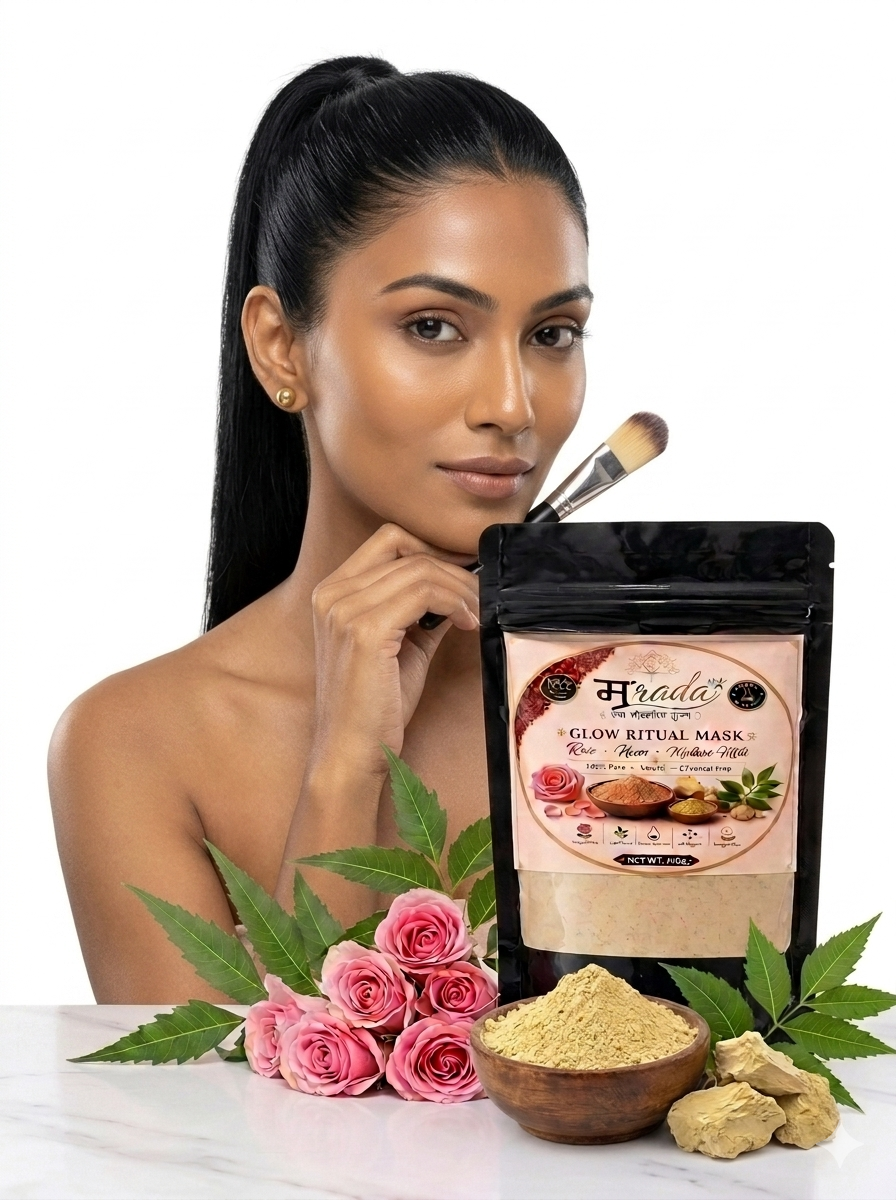
By Mrada Skincare
Multani Mitti: What It Actually Does for Your Skin, and What It Can't Do
Multani mitti has been in Indian homes for generations. Here is a plain guide to what this clay really does, who it suits, how to use it without drying your skin, and the claims you should ignore.
Almost every Indian household has a memory of multani mitti. A grandmother mixing it in a steel katori, a mother putting it on before a wedding, a summer afternoon with a cracked yellow face in front of the cooler. It is one of the oldest skincare habits we have, and also one of the most exaggerated. Packets promise "instant fairness", reels promise that it "removes acne overnight". Neither is true. So let us look at what it really is.
What multani mitti is
Multani mitti is fuller's earth, a natural clay rich in minerals like magnesium, calcium and aluminium silicates. The name comes from Multan, where it was traded for centuries. Its one real talent is absorption. Clay particles soak up oil and the dirt that sits in that oil. That is why it feels so clean after you wash it off, and why it has been used for everything from cleaning wool to soaking up spills.
What it can do for your face
- Take away surface oil. If your T-zone shines by 2 pm, a clay mask once or twice a week can make skin feel less greasy for a day or so.
- Make pores look less obvious for a while. Pores don't shrink, but when the oil in them is lifted they look smaller.
- Give a fresh, matte look before an event. This is why it was a pre-wedding favourite.
- Act as a very gentle physical cleanser when you rub it off with water.
What it cannot do
- It does not change your skin colour. Any "fairness" you see after washing is just oil and dead skin being removed, and it fades the same day.
- It does not cure acne. It can help oily skin feel cleaner, which some people find helps, but active, painful pimples need a dermatologist, not a face pack.
- It does not remove tan in one use, and it does not "detox" anything. Your skin doesn't store toxins that clay can pull out.
- It does not replace sunscreen or moisturiser.
Saying this clearly matters, because people who expect miracles end up using it every day, and that is where problems start.
Who it suits
Oily and combination skin get the most out of it. Normal skin can use it now and then. Dry skin, sensitive skin, and skin with eczema or rosacea should be careful, because clay does not choose which oil it removes. It takes your skin's own protective oil along with the excess.
How to use it properly
1. Wash your face with a mild cleanser and pat it dry.
2. Take one to two teaspoons of powder in a clean bowl. Use a plastic or wooden spoon if you like, but steel is fine too.
3. Add liquid slowly, a few drops at a time, until it becomes a smooth paste, like thick curd. Plain water works. Rose water is a pleasant option.
4. Apply a thin, even layer. Leave the area around your eyes and lips bare. The skin there is thin and dries out fast.
5. Wait 8 to 10 minutes. Wash it off while it is still a little damp and has just started to turn pale. You don't need to wait for it to crack.
6. Rinse with lukewarm water, using your fingers in small circles. Don't scrub hard.
7. Put on moisturiser straight away, even if your skin is oily. A light gel is enough.
The cracking myth
Many of us grew up thinking the pack should dry until it cracks and the face feels tight. That tight feeling is your skin losing water. Leaving clay on that long is the most common reason people say multani mitti "made my skin rough". Take it off earlier and the difference is obvious.
How often
Once a week is a good start for oily skin. Twice a week at the most. For normal skin, once every one or two weeks. If your skin feels tight, flaky or itchy the next day, go back to less often.
A few honest notes
- Always do a patch test the first time. Put a little on the inside of your arm or behind the ear, wash it off after 10 minutes, and wait 24 hours.
- Don't use it on broken skin, a fresh sunburn, or right after waxing or threading.
- If you use prescription creams like retinoids or acne gels, ask your doctor before adding a clay mask. Both can dry the skin, and together they can be too much.
- Store the powder in a dry, closed container. Once you add water, use the paste that day and throw away what is left.
Multani mitti is a simple, inexpensive habit that works well when you ask it to do the one thing it is good at. Treat it as a weekly reset for oily skin, not a cure for everything, and it will serve you well.