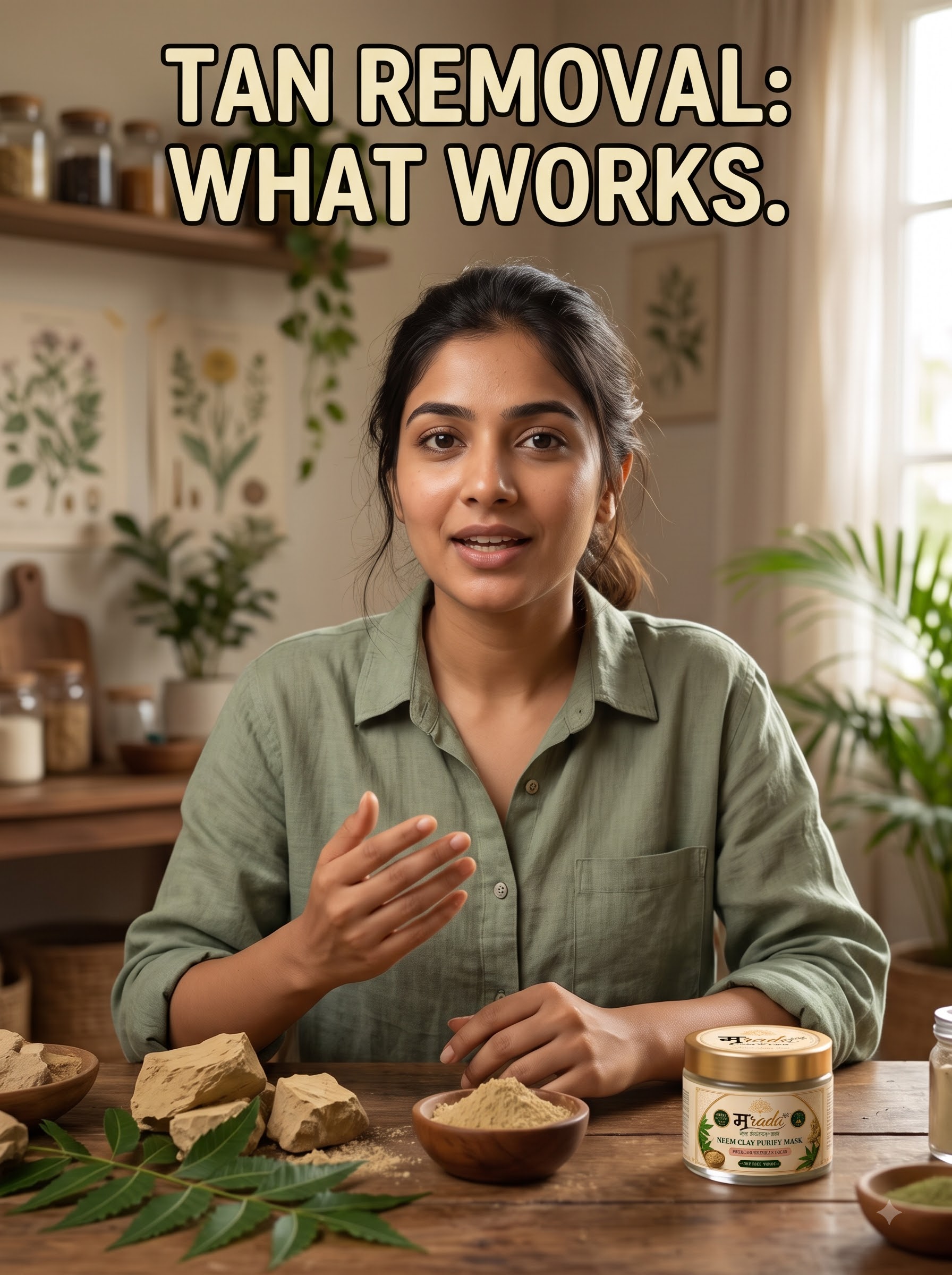
By Mrada Skincare
Tan Removal: What Actually Works and What Doesn't
A tan fades on its own as skin renews itself, usually over a few weeks. What speeds that up gently, which home remedies can make it worse, and how to stop the tan from coming back.
After a holiday, a wedding season or just a few weeks of summer commuting, most of us look in the mirror and want the tan gone, quickly. The internet is full of overnight fixes. Most of them don't work, and some of them hurt your skin. Here is what is actually going on, and what genuinely helps.
What a tan is
A tan is your skin protecting itself. Sunlight triggers cells called melanocytes to make more melanin, the brown pigment, which spreads into the upper layers of skin. Those upper layers are constantly being replaced. That is why a tan fades on its own, usually over two to six weeks, once you stop adding more sun on top of it.
So tan removal is really two jobs: stop new tanning, and help the old, tanned surface cells leave a little sooner.
Step one: stop adding to it
This is the part people skip, and it matters most. Every day of unprotected sun adds new pigment while you are trying to fade the old one.
- Wear a broad spectrum sunscreen, SPF 30 to 50 with PA+++ or more, every morning.
- Reapply if you are outdoors for long.
- Use shade, a cap or a dupatta when the sun is strong, roughly 11 am to 4 pm.
Step two: gentle exfoliation
Removing dead surface cells helps the tanned layer go faster. The key word is gentle.
- A clay mask once or twice a week helps clear oil and dead skin from the surface, so skin looks fresher and more even. It won't remove a tan in one use, but it is a useful weekly step.
- Curd or yogurt mixed into a face pack adds a little lactic acid, a mild exfoliant.
- Over-the-counter exfoliating products with lactic or mandelic acid can help, used as directed and not with other scrubs on the same day.
Step three: moisturise
Well hydrated skin renews more evenly and looks less dull. Use a moisturiser suited to your skin type, morning and night.
What doesn't work, or makes it worse
- Lemon juice: very acidic, and on some people it causes burning and dark patches when they go out in the sun afterwards.
- Baking soda, toothpaste or harsh scrubs: they damage the skin barrier. Irritated skin can actually produce more pigment.
- Bleach creams used at home: they can cause irritation, and some products sold online contain banned ingredients like mercury or strong steroids.
- Rubbing hard with a towel or loofah: friction is a known trigger for darkening, especially on Indian skin.
If something stings or burns, wash it off. A tan is temporary; damaged skin can leave marks for months.
How long should you wait
With sunscreen every day and a gentle weekly routine, most tans fade noticeably within a few weeks. If you have patches that don't fade after two to three months, or patches that look different from a normal tan, such as melasma on the cheeks and upper lip, please see a dermatologist. Those need proper treatment, not home remedies.
The short version
Protect from new sun every day, exfoliate gently once or twice a week, moisturise, and give it a few weeks. It is not exciting, but it is what works.